


Ergonomic harnesses are designed to keep your dog safe, comfortable, and healthy by supporting their natural movement and reducing pressure on sensitive areas like the neck and spine. Unlike collars, which can cause strain and injuries, these harnesses distribute force across the chest and shoulders, ensuring a better fit and improved mobility. Key features include adjustable straps for a secure fit, breathable materials for comfort, and Y-shaped chest plates to allow unrestricted movement.
Key Benefits of Ergonomic Harnesses:
- Pressure Distribution: Reduces strain on the neck and spine by spreading force across the chest and shoulders.
- Improved Comfort: Lightweight, breathable fabrics like mesh or Ultrasuede prevent chafing and overheating.
- Natural Movement: Designs avoid restricting shoulder blades, allowing full mobility during walks or play.
- Health Protection: Helps prevent injuries like tracheal collapse, altered gait, and arthritis.
- Secure Fit: Adjustable straps ensure the harness stays snug without causing discomfort.
Ergonomic harnesses are ideal for daily walks, training, and even travel, offering better control and safety compared to collars. For the best results, measure your dog accurately and adjust the harness properly to avoid chafing or restricted movement.
How Ergonomic Harnesses Reduce Strain
Ergonomic harnesses are designed with your dog's body in mind, offering protection for sensitive areas while ensuring comfort during all types of activities. By distributing pressure and respecting natural movement, these harnesses help keep your furry friend safe and happy.
Moving Pressure Away from the Neck
Traditional collars place pulling force directly on the neck, which can harm the trachea, thyroid, and cervical spine - especially for dogs that pull or lunge. Ergonomic harnesses address this issue by shifting the force to the sternum (breastbone), a strong vertical bone built to handle pressure.
Instead of concentrating force in one spot, these harnesses use loops around the torso and neck base to spread the load over a larger surface area. This design is particularly important for brachycephalic breeds like Pugs and Bulldogs, which already face breathing challenges. By positioning the harness below the throat, it keeps pressure off the respiratory system entirely.
Next, let’s explore how these harnesses also minimize skin irritation and maximize comfort.
Reducing Chafing and Skin Irritation
A well-designed harness won't just fit correctly - it will also prevent rubbing and discomfort. Padding and proper strap placement are key to avoiding chafing.
Sensitive areas like the armpits, shoulders, and upper ribs are prone to irritation. Y-shaped chest pads are especially effective because they allow shoulder blades to move freely without creating pressure points, while also ensuring straps don’t cross the throat. Adjustable chest pads help keep the armpit area clear, so the straps don’t dig into the skin when your dog moves.
The materials used in the harness also make a big difference. Padding, such as neoprene or fleece, under metal rings and clips prevents direct contact with the skin. Breathable fabrics like mesh or ventilated neoprene help avoid heat and moisture buildup, which can soften the skin and lead to sores.
To maintain a proper fit, it’s a good idea to re-measure your dog every six months or whenever their weight changes by more than 10%. Regular cleaning, ideally weekly, helps remove dirt, sand, and other debris that could cause friction against your dog’s skin.
By addressing these factors, ergonomic harnesses ensure your dog stays comfortable and free to move.
Allowing Natural Movement
Beyond reducing pressure and irritation, ergonomic harnesses are built to allow your dog to move naturally and without restriction. The design avoids blocking the scapula (shoulder blades), ensuring full front leg mobility.
Research supports this. A study using the Tekscan Strideway gait analysis system on 66 dogs found that harness design directly influences stride length and how weight is distributed between the front and hind legs. Poorly fitting harnesses can restrict shoulder extension, causing shorter steps or hesitation during movement.
Biomechanical analysis from the Budapest University of Technology and Economics confirmed that properly fitted ergonomic harnesses don’t interfere with a dog’s natural gait. The chest strap should align with the sternum and remain stable during movement to prevent friction and restriction.
"A poorly fitting harness could cause overuse soft tissue injuries due to abnormal pressures or compensatory muscle overuse from using an unnatural gait." – Dr. Chris Zink, Canine Sports Medicine Veterinarian
For medium-sized dogs, you should be able to fit one hand’s breadth of space between the armpit and the chest strap. This simple check ensures your dog can fully extend and rotate their shoulders during any activity, whether it’s walking, running, or playing.
sbb-itb-c3a5f9c
Ergonomic Harnesses vs. Traditional Collars
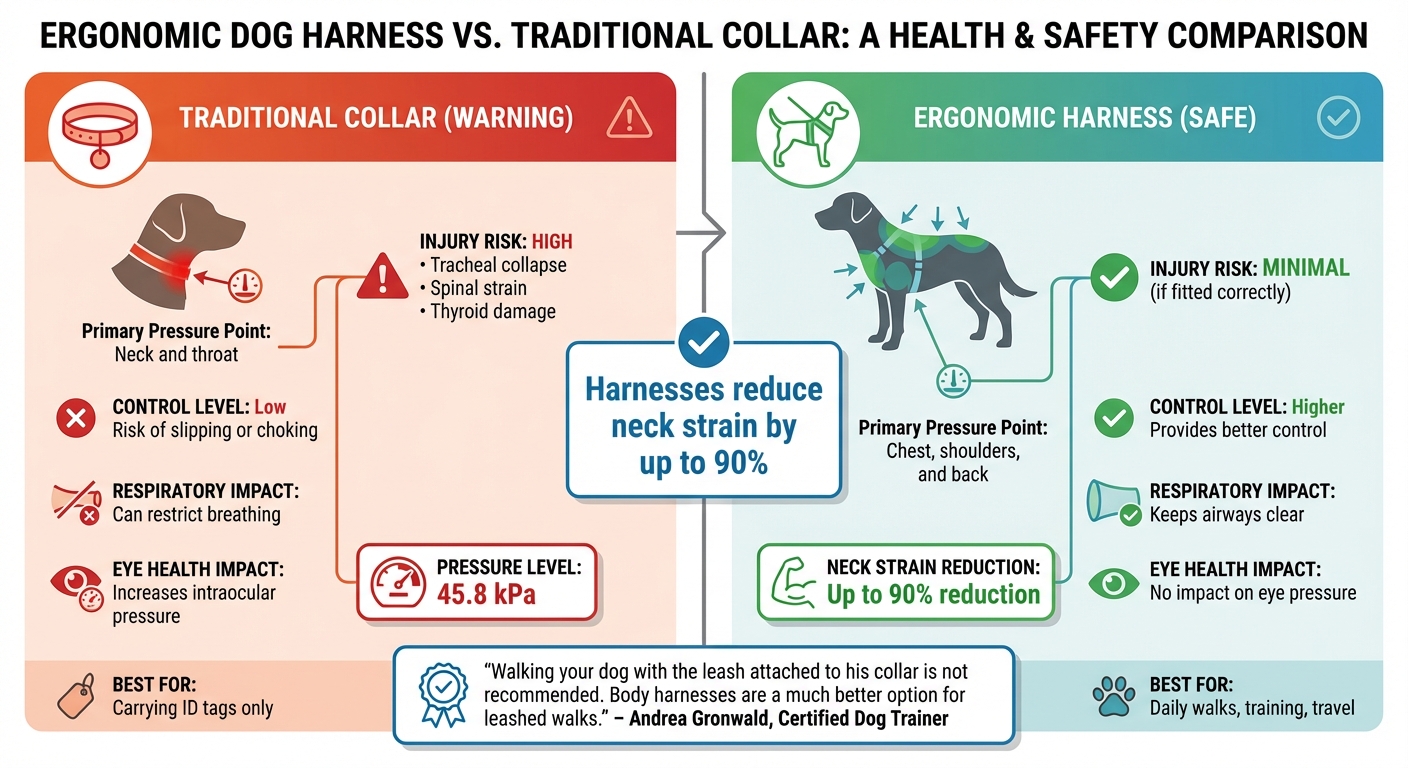
Ergonomic Dog Harnesses vs Traditional Collars: Safety and Comfort Comparison
If you're debating between a harness and a collar for your dog, consider this: collars concentrate force directly on the neck, which can affect sensitive areas like the trachea, esophagus, thyroid gland, and cervical vertebrae. This is particularly risky for dogs that pull on the leash. In fact, the pressure from a collar can reach 45.8 kPa - higher than what poorly-fitted horse saddles exert.
Ergonomic harnesses, on the other hand, spread pressure across the chest, shoulders, and back. This even distribution helps protect the neck and reduces the risk of injury. For dogs with respiratory issues or conditions like collapsing trachea, harnesses are a safer option. Similarly, brachycephalic breeds, like Pugs and French Bulldogs, benefit from harnesses as they prevent additional respiratory strain.
Harnesses are also designed with comfort and functionality in mind, making them a better choice overall. The table below highlights the key differences between traditional collars and ergonomic harnesses for quick reference.
Comparison Table: Harnesses vs. Collars
| Feature | Traditional Collar | Ergonomic Harness |
|---|---|---|
| Primary Pressure Point | Neck and throat | Chest, shoulders, and back |
| Injury Risk | Tracheal collapse, spinal strain, thyroid damage | Minimal (if fitted correctly) |
| Control Level | Low; risk of slipping or choking | Higher; provides better control |
| Respiratory Impact | Can restrict breathing | Helps keep airways clear |
| Eye Health Impact | Increases intraocular pressure | No impact on eye pressure |
| Best For | Carrying ID tags | Daily walks, training, travel |
For dogs with narrow heads, like Greyhounds, collars can also pose an escape risk. A three-point harness offers a much more secure fit. Some premium harness options, such as those from Susan Lanci Designs, use soft Ultrasuede fabric and adjustable straps to ensure both comfort and safety without the downsides of traditional collars.
This comparison makes it easy to see why harnesses are the go-to choice for daily walks, training, and active play.
When to Use Ergonomic Harnesses
Ergonomic harnesses are more than just a stylish accessory - they're a thoughtful choice for your pet's comfort and safety. Understanding when to use one instead of a collar can make a noticeable difference in your dog's well-being, especially during specific activities.
Daily Walks and Outdoor Activities
Daily walks are a prime example of when an ergonomic harness shines. If your dog tends to pull on the leash, a harness can help prevent choking and reduce the risk of injuries like laryngeal paralysis or tracheal collapse.
For added safety, consider harnesses with reflective materials or LED attachments to keep your dog visible during early morning or evening strolls. Planning a hike or venturing into rugged terrain? Harnesses with built-in handles and extra straps provide better control in tricky situations. In warm weather, breathable mesh materials help keep your dog cool, while neoprene harnesses are perfect for water-loving pups - they offer padding and dry quickly.
Training and Active Play
Training sessions become much easier with front-clip harnesses, especially for dogs that pull. These harnesses gently redirect your dog’s momentum, giving you greater control without causing discomfort. Many models allow you to switch between a front clip for training and a back clip for casual play. For strong pullers, using a double-ended leash attached to both clips offers even more control.
Active play demands a harness that allows freedom of movement, which is where Y-shaped ergonomic designs excel. These harnesses support natural shoulder extension, letting your dog run, jump, and play without restriction. To ensure the harness fits correctly, watch your dog’s gait - it shouldn’t block the shoulder blades or interfere with the front legs’ natural motion.
These same features are also essential when traveling, where safety and security are priorities.
Travel and Car Safety
Traveling with your dog requires a harness designed for security. For dogs prone to escaping during car rides or in unfamiliar environments, safety harnesses with a second belly strap are highly recommended. Brachycephalic breeds like Bulldogs and Pugs benefit from three-point designs that provide extra stability.
For car rides, an auto harness that connects directly to your vehicle's seat belt system is a must. These harnesses keep your dog secure during sudden stops without putting pressure on their neck. High-end options, such as those from Susan Lanci Designs, combine soft Ultrasuede fabric with adjustable straps, offering both comfort and safety for travel.
Conclusion
Ergonomic harnesses do more than just look good - they're designed to prioritize your dog's comfort and overall health. By focusing on proper fit and functionality, these harnesses protect sensitive areas and promote natural movement. Unlike traditional collars, which can place harmful pressure on the neck, ergonomic harnesses distribute force across the chest and shoulders, reducing neck strain by up to 90%. This shift helps prevent serious issues like tracheal collapse, laryngeal paralysis, and spinal injuries, all while allowing your dog to move freely.
High-quality materials, such as Ultrasuede, add to the comfort by offering breathability, durability, and a soft texture that prevents chafing. This means your dog can enjoy walks, playtime, and adventures without discomfort. The American Kennel Club highlights the benefits of harnesses, stating:
"A harness distributes the pressure across a larger, less delicate area of the body." – American Kennel Club (AKC)
For dog owners looking for a perfect combination of ergonomic design and premium craftsmanship, Susan Lanci Designs provides handcrafted harnesses made from Ultrasuede. With 11 sizes available, these harnesses ensure a precise fit. Choosing the right harness isn’t just about style - it’s about giving your dog the support and care they deserve.
FAQs
How do I know if my dog’s harness is restricting movement?
A harness can interfere with your dog’s movement if it leads to chafing, restricts shoulder extension, or limits their full range of motion. To ensure a good fit, try sliding two fingers between the harness and your dog’s body. This simple check can help prevent discomfort and allow your dog to move naturally.
What harness features help prevent chafing?
To help avoid chafing, choose harnesses with adjustable straps and soft, padded materials like Ultrasuede®. Make sure the harness fits snugly - tight enough to stay in place but not so tight that it rubs or irritates your dog's skin.
When should I re-measure and re-fit my dog’s harness?
To keep your dog comfortable and safe, it’s important to re-measure and adjust their harness if there are changes in their size or weight. Also, pay attention to signs like discomfort, chafing, or the harness slipping out of place - these are clear indicators that a re-fit is needed. A well-fitted harness not only prevents strain but ensures your dog stays comfortable during walks or other activities.